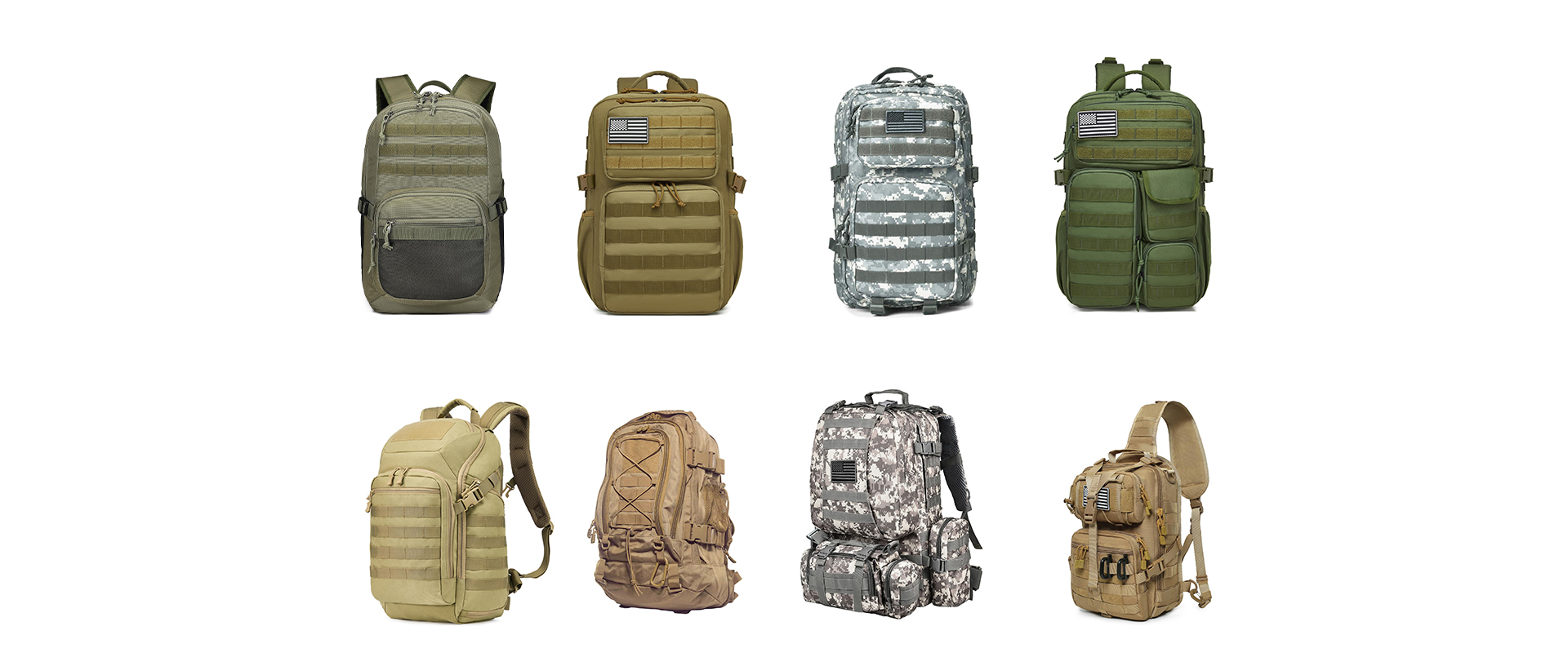
Complete MiLitary Backpack Manufacturing Process — From Design to Delivery
At LET Bag Manufacturing, we believe that a perfect backpack is more than just fabric and stitching — it’s the result of precise craftsmanship, functional design, and reliable materials.
Below, we detail the full production process of a professional backpack, from concept to shipment, helping you understand how every great design becomes a market-ready product.


1. Preparation Stage
1.1 Order & Client Communication
Requirement Confirmation:
We begin by thoroughly discussing your product requirements, including:
Purpose: military, outdoor, travel, or civilian use
Design functions: capacity, compartments, MOLLE or external systems
Material selection: fabric type, waterproof coating, accessory brands (e.g. YKK, Duraflex)
Budget and delivery schedule
Contract Signing:
All key terms such as quantity, unit price, delivery date, and after-sales support are confirmed in the order agreement.
1.2 Design & Prototyping
Product Design:
Our design department creates CAD drawings or 3D models based on your specifications.
We focus on functionality, comfort, and durability — ensuring the design meets both practical and aesthetic expectations.
Pattern Making & Sample Production:
Our technicians develop accurate paper patterns, cut the fabric, and assemble the first prototype sample.
This sample is then shared with the client for evaluation and modification until it meets expectations.
1.3 Material Procurement
Supply Chain Management:
Fabrics: 500D or 1000D polyester/nylon options, selected according to function (waterproof, ripstop, abrasion resistance).
Accessories: Premium zippers (YKK), buckles (Duraflex), Velcro, and webbing are sourced for long-term reliability.
Material Inspection:
Every batch is tested for waterproofing, abrasion resistance, and tensile strength.
Materials are approved only after passing our internal quality standards to ensure consistency across all units.
2. Production Stage
2.1 Production Planning
Capacity Planning: Production is divided into batches based on order size, optimizing machine and labor allocation.
Process Setup: The manufacturing process is divided into key phases — cutting, stitching, assembling, and quality inspection — each with clear timelines and QC standards.
2.2 Fabric Cutting
Automated Cutting: High-precision cutting machines or laser cutters are used to achieve exact dimensions as per the pattern.
Accessory Preparation: All hardware and components (buckles, zippers, straps) are distributed to each production line in advance.
2.3 Component Production
Sectional Sewing:
Main Compartment: Body assembly with inner partitions.
Carrying System: Shoulder straps, back pads, and waist belts are sewn with ergonomic precision.
MOLLE or External Systems: Webbing and side pockets are attached with reinforced stitching.
Component QC: Each piece is checked before integration to avoid loose threads or missed stitches.
2.4 Final Assembly
All major components (main body, straps, external attachments) are stitched together.
Detail Finishing:
Double-check seam strength
Ensure all zippers and buckles function smoothly
Add logo patches or custom branding as required
2.5 Quality Inspection
Every backpack undergoes strict testing before packaging:
Tensile Test: Ensuring handles and straps withstand heavy loads
Waterproof Test: Simulating rain exposure to verify seam sealing
Abrasion Test: Evaluating long-term durability of the fabric
Visual Inspection: Guaranteeing color uniformity, no stains, and no manufacturing defects
3. Post-Production Stage
3.1 Cleaning & Packaging
Cleaning: Backpacks are fully cleaned to remove lint, dust, or loose threads.
Packaging: Each bag is packed individually in polybags or cartons. Custom packaging (tags, brand boxes, etc.) is available upon request.
3.2 Storage & Shipment
Warehouse Management: Finished goods are recorded, labeled, and stored in dedicated areas.
Logistics: We arrange ocean, air, or land shipment based on your delivery preferences.
Before dispatch, all quantities and models are double-checked to match the packing list.
3.3 After-Sales Support
Feedback Collection: We stay in contact with clients to gather real-use feedback.
Issue Resolution: Maintenance, replacement, or process improvements are provided for any reported product issues.
4. Tactical Backpack Selection Guide
As tactical and outdoor backpacks are among the most demanding categories, here are key professional recommendations when choosing or designing your next tactical pack:
✅ 1. Capacity & Purpose
Choose the right size based on your activity:
20–30L: daily carry, urban commuting
40–60L+: outdoor survival, military, or extended missions
💪 2. Material DurabilitySelect 500D–1000D nylon or polyester for optimal balance between strength and weight.
Ensure fabrics have PU or TPU waterproof coatings for long-term outdoor use.
⚙️ 3. MOLLE System & ModularityModern tactical backpacks should feature MOLLE/PALS webbing for attaching pouches, tools, and accessories.
🎒 4. Ergonomic Carry SystemA tactical pack must fit the user comfortably:
Padded shoulder straps and ventilated back panels
Adjustable sternum and waist straps for balanced load distribution
💧 5. Functional Details
Look for:
Hydration bladder compartment
Quick-access front pockets
Waterproof zippers
Reinforced base and handle stitching
🎯 6. Aesthetic & Practical Balance
While the “tactical look” is popular, practicality should come first.
Overly aggressive designs may not suit civilian or urban users — select according to your brand image and target market.

Partner with LET — Your Trusted Backpack Manufacturer
Whether you are launching a new product line or expanding your brand, LET offers full-service custom manufacturing — from design to production — ensuring efficiency, quality, and reliability.
📩 Contact us today to start your custom backpack project.
A dedicated project manager will assist you through every stage — from concept to final delivery.
Military Backpacks Cases